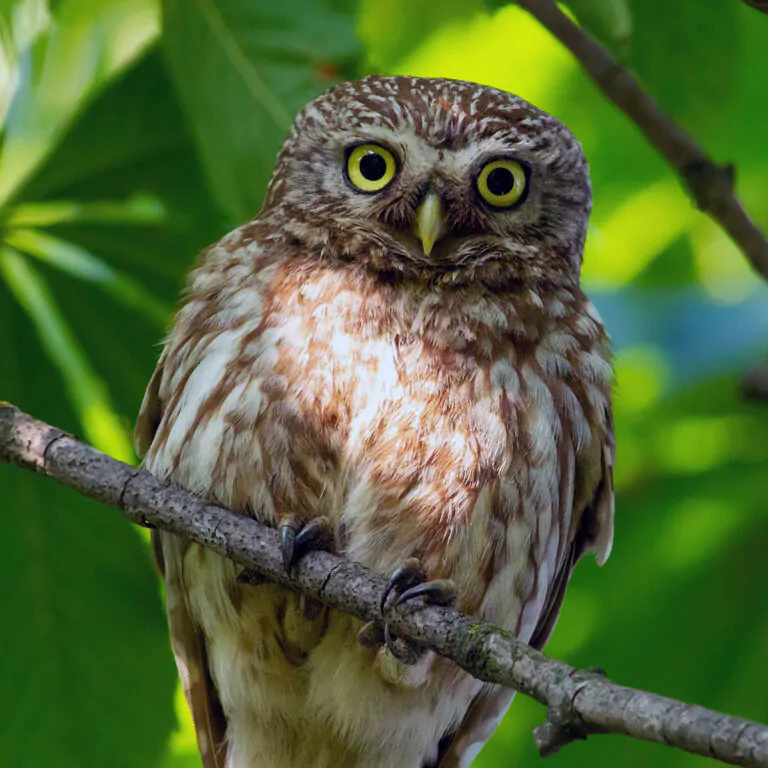
Teeming with an incredible variety of mammals, birds, insects and reptiles along with varied vegetation, Tipeshwar Wildlife Sanctuary is a naturalist’s treasure. A majority of the landscape is dominated by basalt rich soil, a result of a century-old lava explosion. From dense forests to open grasslands, the diverse landscape makes it a suitable habitat for numerous species of flora and fauna.
Tipeshwar is primarily categorised as a Southern Tropical Dry Deciduous Forest. It is this deciduous nature that makes for dramatically different scenery in every season. While a palette of brown and rust sweeps though the summers, monsoons paint the landscape a lush green.
The plant life of Tipeshwar includes both deciduous and evergreen trees with a wide variety of grasses like Kunda, Kadmod, Guhar, Gokru, among others.
Tipeshwar is known for its bamboo groves that include 250 species like Tulda, Kalal and Nana. A history of monoculture by the British has resulted in teak (Tectonic grades) being a dominant species. Red Sandalwood (Pterocarpus santalinus), among the most expensive sandalwood varieties in India, covers 15% of the sanctuary.
Other trees include Achar (Cordia myxa), Lendia (Lagerstroemia parviflora) and Bhirra Tiwas (Ougeinia oojeinense). One of the most treasured trees in the region is Mahua (Madhuca longifolia) — the tribes of Central India use its flowers for their medicinal properties, as a sweetener and the main ingredient for the local brew.
Come spring, Tipeshwar forest is painted a beautiful red by Palash trees; the blossoming of the Flame of the Forest is a particularly delightful time of the year to enjoy Tipeshwar.
With over 180 bird species belonging to 46 families of 16 different orders, Tipeshwar is the birder’s favourite perch. Ten different migratory birds visit through the year.
Summers bring the Indian Cuckoo, Asian Brown Flycatcher and Indian Nuthatch while the monsoons play host to the Fork-tailed Drongo, Jacobin’s Cuckoo and Eurasian Cuckoo. As temperatures drop, our winter guests include Eurasian Sparrowhawk, Black Redstart, Common Rosefinch and Northern Pintail.
The climes of Tipeshwar suit a clutch of threatened species such as Painted Stork, Asian Wooly-necked Stork, Black-headed Ibis and Oriental Darter. Tipeshwar is one of the few places in the world where you can still spot the critically-endangered Indian Vulture.
A variety of plant species and seasonal variation in flora attract an incredible range of butterflies. The dry deciduous forest is visited by 97 species of butterflies belonging to 64 genera of five families. As the monsoon gives way to the winter, there is an abundance of butterflies, making October to January the best time to visit for those interested in smaller fauna.
The Royal Bengal Tiger is inarguably Tipeshwar’s biggest draw. In fact, the contiguous forested tracts of central India that include Pench, Kanha, Satpura, Tadoba and Tipeshwar support 16% of the total number of tigers found in India.
Currently there are around 14 tigers who call this home. The last decade has seen a significant increase in the sanctuary’s tiger population. In fact, with the smaller size of the sanctuary, no zoning, and almost all of it being open to safari, the chances of tiger spotting in Tipeshwar are much higher than many other parks.
It’s not uncommon to see a majestic mother tigress with her cubs enjoying a drink of water from the many natural streams or cooling off right in the middle of the dirt roads we drive on.
Besides the tiger, tourists may spot a host of other mammals on safari — from herbivores like Chinkara (Indian Gazelle), Chital (Spotted Deer), Chousingha (Four Horned Antelope) and Gaur (Indian Bison) to carnivores like Dhole (Wild Dog), Leopard Cat and Panther and scavengers like Striped Hyena.

It is home to significant populations of Sloth Bear, Black Buck, Sambar, Jackal, Wild boar and a host of primates. Tipeshwar’s felid residents include Jungle cats, Leopards and Rusty Spotted Cat. Black-naped hare, Honeybadgers and Indian Palm Civets are among the smaller mammals that are found here.
The nilgai’s preference for areas with short bushes and scattered trees in scrub forests and grassy plains makes Tipeshwar an ideal habitat. Endemic to the Indian subcontinent, nilgai is Asia’s largest antelope.
There are around 26 reptile species within the sanctuary, including the near threatened Indian Rock Python and Red Sand Boa . The extremely rare Indian Egg Eater (Elachistodon Westermanni)— a semi-arboreal reptile named for its penchant for making a meal out of eggs from bird nests — was recently spotted. Other snakes of interest include the Indian Cobra, Indian Rock Python, Russel’s Viper, and Checkered Keelback.
Tipeshwar may be small, but with a wide variety of animals, birds, insects and vegetation, it is listed among the best wildlife sanctuaries in Maharashtra by the serious wildlife traveller.
Before the park closed for the monsoon season in July 2023, with the help of trackers, safari sightings and camera traps, at least 14 tigers have been identified at Tipeshwar.
Early in February, Tigress T1, fondly called Talaowali caused a stir when she stopped by at Tipai for a drink of water. She’s one of Tipeshwar’s four resident adults along with Archie (T7), Mark (T4) and Zanjeer(T8). While Talaowali recently gave birth to three healthy cubs, Archie had a second litter — both litters were sired by Zanjeer.
Zanjeer, born of Pilkhanwali and Star, currently reigns supreme at Tipeshwar. After a duel between father and son, the defeated Star and Pilkhanwali left Tipeshwar for quieter pastures.
Veer, named for the distinct V on his forehead, returned to Tipeshwar where his mother Talaowali still lives, after an absence of two years. In June 2021, Veer ventured beyond the boundaries of the sanctuary. While the Forest Department tried hard to locate him, all efforts were in vain, barring a chance sighting in Pusad. In June 2023, tourist photographs of a tiger with a V on his forehead indicated that Veer had returned to the forest he was born in, testament to a tiger’s homing instincts.


Wildlife Luxuries is a sustainable travel and hospitality venture.
Wildlife Luxuries India © 2026
Website by Media Fusion

Overview

Into the Wild
Safaris, forest walks, lake evenings

Flavours of the Land
Chef-led dining,
farm-to-table,
immersive meals

The Art of Unwinding
Nature-led wellness, yoga, therapies, fitness