


Family Safari at Tipeshwar: Why Parents Choose Wildlife Luxuries for First Tiger Experience

Taking children on their first tiger safari creates opportunities for transformative nature education and family bonding. It also presents challenges: long vehicle rides, unpredictable wildlife sightings, safety considerations, and keeping young minds engaged during potentially unsuccessful safaris.
Families choosing Tipeshwar Wildlife Sanctuary and Wildlife Luxuries for their first wildlife experience cite specific factors that make the combination work particularly well for children. Understanding what actually makes family safaris successful helps parents set realistic expectations and choose properties aligned with family needs rather than general luxury positioning.
Age Considerations and Regulations
National park regulations and practical considerations both affect appropriate ages for safari participation.
Minimum Age Requirements
Most Indian national parks set minimum age limits around 5 years, though specifics vary by park and vehicle type. Tipeshwar Wildlife Sanctuary allows children aged 5 and above on safaris in closed gypsy vehicles.
Some parks permit younger children in private vehicles at management discretion. Always confirm specific age policies when booking rather than assuming flexibility exists.
Developmental Readiness
Regulatory minimums aside, practical readiness depends on individual children:
Ages 5 to 7: Can participate but require very patient parents. Attention spans average 15-20 minutes. They understand instructions about staying quiet and still but struggle maintaining compliance for 3-hour safari duration. Success depends heavily on whether animals appear early in safari.
Ages 8 to 10: Hit a sweet spot for first safaris. Old enough to understand wildlife viewing requires patience, young enough to find the experience genuinely exciting rather than obligatory. Can maintain quiet and attention for reasonable periods. Comprehend safety instructions.
Ages 11 to 14: Excellent age range. Sustained attention possible, real interest in animal behavior develops, photography skills emerge, educational aspects resonate. May need engagement strategies if sightings don’t materialize, but generally handle disappointment better than younger children.
Teenagers (15+): Can appreciate the full experience when genuinely interested. However, forced participation by uninterested teens creates difficult dynamics. Teens enthusiastic about wildlife, photography, or nature make ideal safari participants.
Realistic Assessment
Parents know their children’s temperaments better than age generalizations suggest. A mature 6-year-old may handle safaris better than an energetic 9-year-old. Consider:
- Ability to sit relatively still for extended periods
- Response to instructions about safety and quiet behaviour
- Interest level in animals and nature
- Tolerance for early mornings (safaris start 6:00-6:30 AM)
- Response to potential disappointment if tigers don’t appear
Why Wildlife Luxuries Works for Families
Specific property characteristics make Wildlife Luxuries particularly suitable for family safaris compared to alternatives.
Small Property Scale Creates Calm Environment
With only 10 villas maximum, the property never feels crowded or chaotic. Children can move around property grounds without parents constantly monitoring interaction with large numbers of other guests.
Quieter environment reduces overstimulation. After exciting safaris, children benefit from returning to peaceful settings rather than properties with 50+ rooms where high energy levels persist constantly.
Small scale means staff knows family names, children’s dietary preferences, and individual needs. This familiarity creates comfort for both parents and children.
Chemical-Free Bio-Pool for Safe Swimming
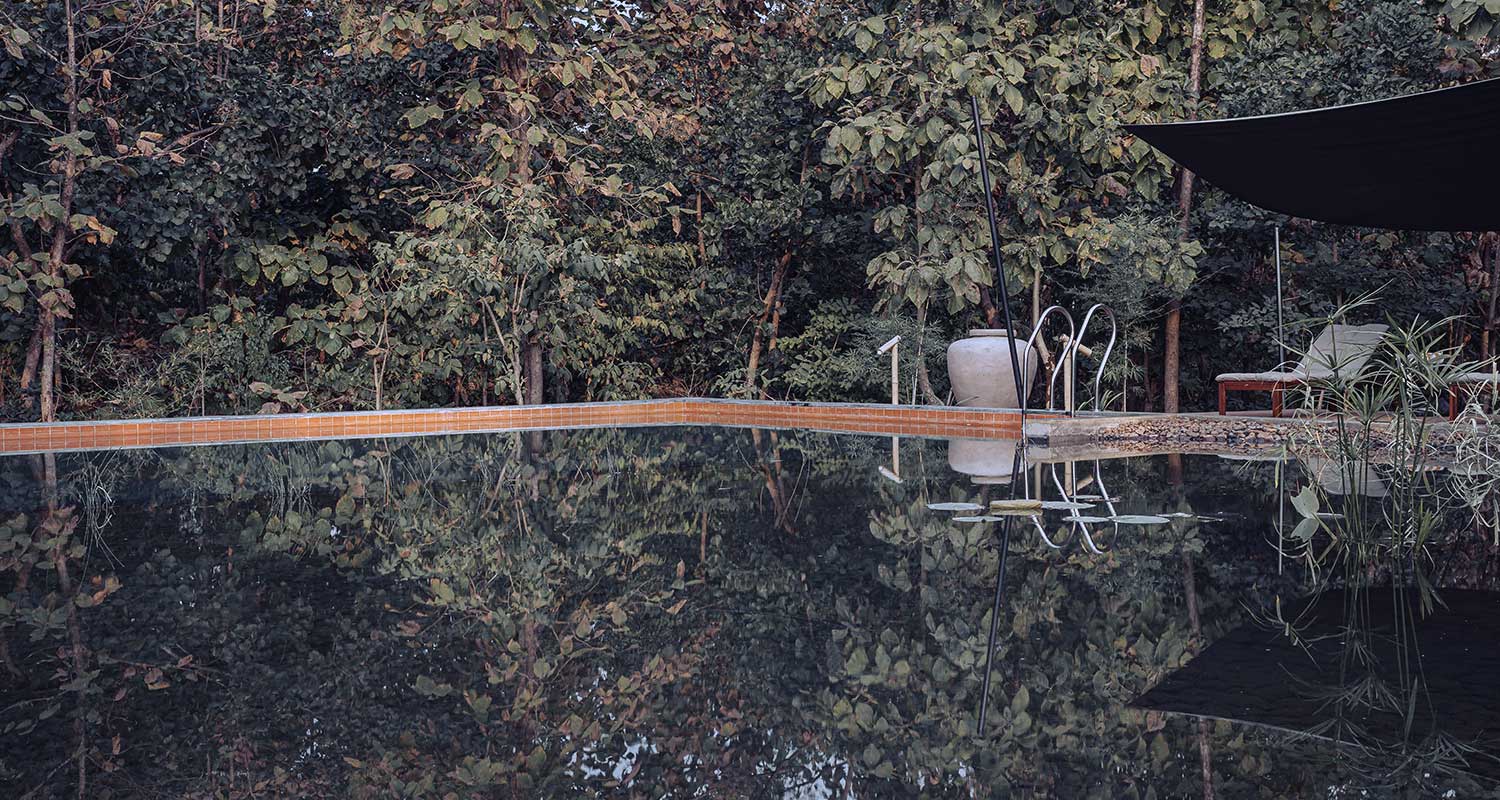
The bio-pool provides significant advantage for families:
No Chlorine Exposure: Children’s skin sensitivity to chlorine varies dramatically. Some children develop rashes, dry skin, or respiratory irritation from chlorinated pools. The bio-pool eliminates these concerns entirely.
Gentler on Eyes: Young swimmers frequently open eyes underwater. Chlorine causes burning and redness. Bio-pool water doesn’t irritate eyes, making swimming more comfortable for children learning water confidence.
Educational Aspect: The regeneration zone with aquatic plants, dragonflies, and visible ecosystem functioning teaches children about natural filtration and ecology. Observing frogs, water insects, and plant life makes the pool itself a nature learning opportunity.
Natural Water Feel: Many children prefer the silky feel of natural water compared to chlorinated water’s chemical slickness.
After hot morning safaris, the pool becomes afternoon refuge. Chemical-free water means parents don’t worry about skin irritation or excessive chemical exposure during extended swimming sessions.
Flexible Safari Scheduling
Wildlife Luxuries arranges private safari vehicles for guests, creating flexibility impossible with shared vehicles at larger properties:
Timing Adjustments: If children need 30 minutes longer to wake up, eat breakfast, and prepare, private vehicles accommodate this. Rigid 6:00 AM departures with shared vehicles create morning stress.
Duration Flexibility: If young children become restless after 2 hours rather than completing full 3-hour safaris, private vehicles can return early without affecting other guests.
Break Options: Private arrangements allow brief stops for bathroom breaks, snacks, or restless child management impossible in shared vehicles.
Nap Accommodation: Afternoon safaris can start slightly later if children need post-lunch rest periods.
This flexibility reduces family stress significantly. Parents can focus on child engagement rather than worrying about disturbing other paying guests in shared vehicles.
Naturalist Engagement with Children
Wildlife Luxuries’ naturalists receive training in family safari dynamics:
Age-Appropriate Explanations: Guides adjust technical information to child comprehension levels. A 7-year-old hears different tiger explanations than a 14-year-old or adult.
Interactive Elements: Naturalists carry items that engage children: plaster casts of paw prints, scat samples, feathers, or other safe natural objects children can touch and examine.
Story-Based Learning: Rather than dry facts, guides frame information as stories. How this tiger established her territory. Why that deer alarm call indicates leopard presence.
Patient Responses: Children ask repetitive or basic questions. Good naturalists answer each inquiry with genuine enthusiasm rather than impatience.
Activity Suggestions: During slow sighting periods, naturalists suggest bird identification games, track spotting contests, or other activities keeping children engaged.
Organic Farm-to-Table Dining Accommodates Picky Eaters
The all-women kitchen team trained by Chef Amninder Sandhu handles family dining challenges better than buffet-focused properties:
Customization for Children: Chefs prepare familiar comfort foods alongside regional specialties. A child uncomfortable with spicy food receives mild alternatives without fuss.
Fresh, Simple Ingredients: Organic produce creates naturally flavorful food without heavy spicing. Children often accept vegetables they normally refuse because freshness and quality differ from what they know.
Dietary Accommodations: Allergies, specific aversions, or strong preferences get addressed through direct communication with kitchen team.
Timing Flexibility: If children need to eat earlier than standard dining times, arrangements accommodate this.
Visible Kitchen Connection: Children can sometimes visit the kitchen, see preparation, and meet the team. This visibility increases willingness to try new foods.
Compared to large buffets where children load plates with familiar starches and ignore everything else, personalized service encourages actual nutritional eating and culinary exploration.
Room Configuration and Space
Villas provide space advantages over standard hotel rooms:
Separate Areas: Most villas include bedroom space plus sitting areas. Parents can read or relax while children sleep without everyone forced into single room darkness.
Outdoor Private Space: Villa decks or patios allow children supervised outdoor time without leaving the accommodation. Watching peacocks, squirrels, or birds from private space creates wildlife connection even between safaris.
Sound Insulation: Thick rammed earth walls mean families don’t worry excessively about children’s noise disturbing neighbors in adjacent rooms.
Cool Interior Temperatures: Natural temperature regulation makes afternoon rest periods more comfortable than air-conditioned rooms that feel artificial or develop cold spots.
Managing Expectations and Disappointment
Tiger sightings are never guaranteed. How families handle safaris without marquee sightings determines whether the overall experience succeeds.
Preparing Children Before the Trip

Honest pre-trip conversations establish realistic expectations:
Probability Not Certainty: Explain that tigers live in the forest and might not appear during your safaris. Even excellent parks with high sighting rates don’t guarantee tigers on every drive.
Other Wildlife Value: Show children photos of other Tipeshwar animals: leopards, sloth bears, wild dogs, deer species, birds, reptiles. Build excitement about diverse possibilities rather than tiger-exclusive focus.
Detective Work Framing: Position safaris as wildlife detective work. Finding paw prints, scat, or scratch marks on trees helps track where animals traveled even if you don’t see them directly.
Forest Experience: Emphasize the adventure of exploring forest areas normally closed to vehicles, seeing ancient trees, experiencing sunrise in wilderness, and being in actual tiger territory.
Children prepared for detection work rather than guaranteed sightings handle empty safaris better.
During Unsuccessful Safaris
When tigers don’t appear, engagement strategies matter:
Focus Shifting: Naturalists redirect attention to present animals. That jungle cat sighting might seem minor after hoping for tigers, but it represents a rare species many safari-goers never spot.
Track Reading: Have children document paw prints they find. Photograph them. Measure them. Count toes. This active participation maintains engagement.
Bird Identification: Bring a simple bird guide suitable for children. Challenge them to spot and identify different species. Tipeshwar has excellent bird diversity that provides ongoing activity.
Story Telling: Naturalists sharing forest stories, local legends, or historical anecdotes fills quiet periods.
Sensory Awareness: Encourage children to close eyes and listen. Can they hear different bird calls? Identify wind in trees vs rustling that might indicate animal movement? Smell changes as you move between forest types?
Photography Opportunities: Give older children cameras or phones to practice wildlife photography on birds, landscapes, or other animals. This creates purpose during tiger-less periods.
Safety Considerations Specific to Families
Parents naturally worry about child safety in wilderness areas with large predators.
In Safari Vehicles
Modern safari vehicles have specific safety features, but children require additional oversight:
Seat Positioning: Place youngest children in vehicle center rather than sides where they might lean out. Older, more responsible children can take side positions.
Hand Placement: Establish clear rules about keeping hands inside vehicle. Children’s instinct to point involves extending arms outside vehicle frame. Teach them to point with fingers while keeping hand inside.
Standing Restrictions: Even when vehicles stop for sightings, children should remain seated unless specifically permitted by guide. Standing children create center-of-gravity issues and fall risks on uneven terrain.
Voice Control: Practice quiet voices before first safari. Explain that loud noises frighten animals and prevent sightings. Whispers only during active safaris.
Emergency Protocols: Make sure children understand they should tell parents or guides immediately if they feel unwell, need bathroom breaks, or experience any problem.
At the Property
Wildlife occasionally moves through resort properties. Safety awareness matters:
Supervised Outdoor Time: Don’t allow young children to wander property alone, especially near dusk or dawn when wildlife activity peaks.
Villa Safety: Keep villa doors closed to prevent snakes or other wildlife entering. Shake out shoes before wearing (scorpions occasionally shelter in dark spaces).
Pool Supervision: Maintain normal pool supervision regardless of bio-pool’s chemical-free status. Drowning risk exists in any water body.
Property Boundaries: Teach children to stay within property boundaries. Forest beyond property lines is genuine wilderness, not park space.
Night Movement: Use provided flashlights when moving between villas and dining areas after dark. Watch pathway edges for snakes that might cross walkways.
Wildlife Luxuries staff patrols property and provides guidance, but parental oversight remains primary safety mechanism.
Educational Value Beyond Sightings

Well-planned family safaris deliver educational outcomes regardless of tiger sighting success.
Ecology and Interconnections
Safari experiences teach children about:
Predator-Prey Relationships: Why deer alarm calls indicate predators. How herbivore populations support carnivore survival. What happens when these balances shift.
Habitat Requirements: Different animals need different forest types. Open grasslands suit certain species. Dense forest supports others. Water sources determine animal distribution.
Human-Wildlife Coexistence: How local villages live near wildlife. Why conservation requires community support. How tourism provides economic incentives for protection.
Seasonal Patterns: How dry season versus monsoon affects animal behavior, plant growth, and ecosystem functioning.
Conservation Awareness
Experiencing wildlife in natural habitats creates conservation ethics impossible to achieve through documentaries or zoos:
Intrinsic Value: Seeing animals behaving naturally in their own environment teaches respect for wildlife as having value beyond human entertainment.
Habitat Loss Understanding: Understanding that forests house these animals makes later discussions about deforestation and habitat destruction more meaningful.
Conservation Complexity: Children learn that protecting tigers requires protecting entire ecosystems, not just individual animals.
Photography and Observation Skills
Safari participation develops practical skills:
Patience and Stillness: Learning to wait quietly for wildlife appearances teaches patience valuable beyond safari contexts.
Observation: Spotting distant animals, identifying tracks, noticing behavioral details all sharpen observation skills.
Photography Basics: Older children learning wildlife photography develop understanding of light, composition, subject behavior, and technical camera operation.
Cost Considerations for Families
Family safaris cost more than couple or solo travel. Understanding total expenses helps budget planning.
Accommodation Costs
Wildlife Luxuries charges per room rather than per person for base accommodation. Two adults and two children often share one villa, making per-person costs lower than if booking separate adult accommodations.
Interconnecting villas for larger families or those preferring separation cost double but still may be cost-effective compared to booking three separate rooms at properties charging per-room.
Safari Permit Costs
Children over 5 require full safari permits at same cost as adults. A family of four pays four times the per-person permit cost (approximately ₹1,500-2,500 per person per safari depending on vehicle type).
However, private vehicle costs remain constant regardless of passenger count (within capacity limits). Four family members in one vehicle costs the same vehicle fee as two adults alone.
Dining Costs
Children’s meal plans at Wildlife Luxuries typically cost less than adult rates. Confirm specific pricing when booking, but expect 30-50% reduction for children under 12.
Some properties charge full adult rates for all children over 5. Wildlife Luxuries’ family-friendlier policy reduces this component.
Total Cost Estimate
For a family of four (2 adults, 2 children ages 8 and 11) booking 3 nights with 4 safaris:
Accommodation: ₹60,000-75,000 (3 nights at ₹20,000-25,000/night for villa) Safaris: ₹40,000-50,000 (4 safaris × 4 people × ₹2,500-3,000 per person) Dining: ₹20,000-25,000 (additional meals, children’s rates) Transport: ₹8,000-12,000 (round-trip from Nagpur) Miscellaneous: ₹5,000-10,000 (spa, beverages, etc.)
Total: ₹133,000-172,000 for 3-night family safari
This represents significant investment but delivers multi-day immersive experience combining accommodation, dining, education, and wildlife viewing.
Comparing Wildlife Luxuries to Alternatives for Families
How does Wildlife Luxuries stack up against other family safari options?
Versus Budget Properties
Budget properties cost 40-50% less but sacrifice elements particularly valuable for families:
Shared Safari Vehicles: Managing children in vehicles with strangers creates stress. Private vehicles at Wildlife Luxuries eliminate this pressure.
Standard Pools: Chlorinated pools may irritate sensitive children’s skin. Bio-pool advantage becomes significant for multi-day stays.
Generic Dining: Buffets don’t accommodate picky eaters well. Custom meal preparation matters more with children than adults.
Larger Properties: 30-50 room properties feel more institutional than intimate. Children may feel overwhelmed rather than comfortable.
Budget properties work better for families with older children (12+) who handle group dynamics easily and don’t require extensive customization.
Versus Ultra-Luxury Properties
Ultra-luxury jungle resorts cost double Wildlife Luxuries rates. What do families gain?
Brand Recognition: Taj, Oberoi, or international luxury brands provide consistency guarantees. Whether this matters for wildlife-focused families depends on priorities.
Additional Amenities: Larger spa facilities, multiple dining venues, possibly kid’s clubs (rare at wildlife properties). Most families on safari prioritize wildlife over resort amenities.
Higher Staff Ratios: Even more personalized service, though Wildlife Luxuries already provides substantial attention at 10-villa scale.
Exclusive Positioning: Ultra-luxury properties market exclusivity. Families often care more about function than prestige.
For most families, ultra-luxury represents diminishing returns. The jump from budget to mid-luxury (Wildlife Luxuries level) provides dramatic quality improvements. Mid-luxury to ultra-luxury provides incremental refinements that matter more to couples or luxury-focused travelers than families prioritizing wildlife experiences.
Practical Tips for Successful Family Safaris

Beyond property selection, tactical decisions affect family safari success:
Packing for Children
- Layered Clothing: Mornings are cool (15-18°C), afternoons hot (35-40°C). Multiple layers allow temperature adjustment.
- Closed-Toe Shoes: Sneakers or hiking shoes protect feet better than sandals in safari vehicles.
- Hats and Sunglasses: Essential sun protection during open-roof vehicle viewing.
- Binoculars: Child-sized binoculars enhance distant wildlife viewing and maintain engagement.
- Journals or Sketchbooks: Older children can document sightings, draw animals, or write experiences.
- Snacks: Backup snacks for picky eaters or energy between meals.
- Familiar Comfort Items: Young children benefit from having stuffed animals, blankets, or other comfort objects in new environments.
Scheduling Strategy
Build Rest Time: Don’t book back-to-back safaris for every available slot. Children need downtime for swimming, playing, resting.
Alternate Safari Participation: Consider whether both parents need to attend every safari. One parent staying back with younger children while the other takes older children creates better age-appropriate experiences.
Allow Flexibility: Don’t over-program. Some families book 4 safaris over 3 nights, leaving 2 potential safari slots open for rest or repeat if first safaris prove successful.
Pre-Trip Preparation
Educational Content: Watch age-appropriate wildlife documentaries before the trip. David Attenborough series, Wild Kratts for younger kids, or India-specific wildlife content builds excitement and baseline knowledge.
Photo Books: Create anticipation by showing photos of animals they might see, resort property, and safari vehicles.
Responsibility Assignment: Give children specific “jobs” during safaris: junior photographer, track spotter, bird identifier. Defined roles increase engagement.
When to Wait Before Booking Family Safari
Sometimes delaying family safari until children mature makes sense:
Very Young Children (Under 5): Regulatory restrictions aside, children this young rarely remember experiences well enough to justify the investment and effort. Waiting until age 7-8 provides better memory retention and enjoyment.
Multiple Young Children: Managing 3+ children under age 8 creates challenges outweighing benefits. Consider waiting until youngest reaches 6-7.
Disinterested Children: If children show zero interest in animals or nature, forced safari participation creates stress for everyone. Better to wait until genuine interest develops.
Budget Constraints: If costs force uncomfortable financial stretching, delay until family budget accommodates the experience comfortably.
Safari opportunities exist throughout childhood. There’s no deadline requiring completion by specific age.
Why First Safari Success Matters
Children’s first wildlife experiences shape long-term nature relationships and environmental values. Success creates foundation for:
Continued Nature Engagement: Positive first experiences lead to ongoing interest in wildlife, habitats, and conservation.
Environmental Ethics: Direct wildlife contact develops conservation awareness that abstract education struggles to achieve.
Family Bonding: Shared adventure experiences create lasting family memories and stories retold for years.
Educational Motivation: Safari experiences make science, ecology, and geography education more engaging by providing real-world context.
Unsuccessful or negative first safaris can diminish enthusiasm for future nature experiences. Property selection that sets families up for success provides value beyond the immediate trip.
Final Recommendations
Wildlife Luxuries works particularly well for first family safaris through specific features: small scale creating calm environments, bio-pool providing chemical-free swimming, flexible private safari scheduling, naturalists skilled with children, organic dining accommodating picky eaters, and villa space for family comfort.
The property doesn’t offer kid’s clubs, organized children’s activities, or extensive child-specific infrastructure some family resorts provide. Instead, it creates environments where families experience wildlife together without institutional children’s programming.
This approach works best for families prioritizing:
- Shared experiences over age-separated activities
- Nature immersion over resort entertainment
- Quality over quantity of amenities
- Intimate scale over comprehensive facilities
For families with children ages 7-14 making their first safari trip, Wildlife Luxuries at Tipeshwar delivers an optimal combination of wildlife access, family-appropriate services, and manageable scale that sets up successful first experiences.
Planning Your Family Safari: Contact Wildlife Luxuries to discuss specific family needs, age-appropriate activities, and package options for family bookings.





