



QUICK ANSWER A digital detox retreat at Tipai does not work by taking anything away from you. There is no device lockbox, no signed pledge, no enforced offline schedule. Signal simply thins out once the forest starts, and a private safari and genuinely unscheduled villa time give a phone nothing useful to compete with. Research into digital detox tourism links this kind of disconnection to measurable improvements in attention and psychological wellbeing, and the global market for it grew to 1.42 billion dollars in 2024 alone.
Key Takeaways
- The global digital detox tourism market reached 1.42 billion dollars in 2024 and is projected to nearly double by 2033.
- Nature-based, adventure-style detox programs make up the largest single segment of that market, ahead of formal wellness retreats.
- A 2026 psychology study tracking 500 participants found digital detox tourism measurably improves attention restoration and psychological wellbeing through genuine environmental disconnection.
- Most detox retreats work by imposing rules, locked devices, structured offline schedules. Tipai’s version works because there is simply less reason to reach for a phone in the first place.
- Detox travellers increasingly prefer accommodations built around sustainable practice, a pattern that lines up naturally with Tipai’s own conservation-first positioning.
The Trip Built Around Disconnection
Off-grid travel is being called the defining trip of 2026, and the numbers back up the label: the global digital detox tourism market reached 1.42 billion dollars in 2024, and industry forecasts expect it to nearly double within a decade. Most of that growth sits in nature-based, adventure-style programs rather than formal spa retreats, which puts a place like Tipai closer to the centre of this trend than a wellness brand might expect. For a guest who has already read about what seclusion on 34 acres actually feels like, the digital detox conversation is really just naming something the stay was already doing.
What separates a good version of this from a bad one is whether disconnection feels chosen or imposed.
What the Research Actually Shows
Digital detox tourism has moved well past wellness marketing copy into genuine academic study. A 2026 psychology study tracking 500 participants through a controlled, longitudinal design found that time spent disconnected in a restorative natural environment measurably improved attention and psychological wellbeing, mediated by how genuinely restorative the environment felt and how present participants were able to be within it. The mechanism matters: it is not the absence of a phone alone that helps. It is what replaces the phone’s attention, and a forest with an actual tiger in it replaces it rather more effectively than a spa’s quiet room.
Why Most Detox Retreats Get This Wrong
The standard digital detox retreat treats disconnection as a rule to be enforced: devices collected at check-in, a locked box, a signed agreement, a structured day of offline activities filling the hours a phone used to occupy. It works, for some people, but it also frames the whole experience as a deprivation being managed rather than an environment naturally worth paying attention to.
| A typical digital detox retreat | A stay at Tipai |
| Devices locked away at check-in, a rule to follow | Signal simply thins out in the forest; nothing is confiscated, there is just less reason to look |
| A structured schedule of enforced offline activities | A private safari and open villa time, with no itinerary demanding your attention instead of your phone |
| Silence positioned as something to endure | Silence that is already the point of being here, whether or not you brought a phone at all |
| A brochure promise of disconnection | A location where connectivity was never the draw to begin with |
The difference is not cosmetic. A rule followed under supervision ends the moment supervision does. A place that simply gives you nothing more interesting to do than watch the forest tends to change the habit rather than just suspend it for a week.

What a Slow Day Actually Looks Like
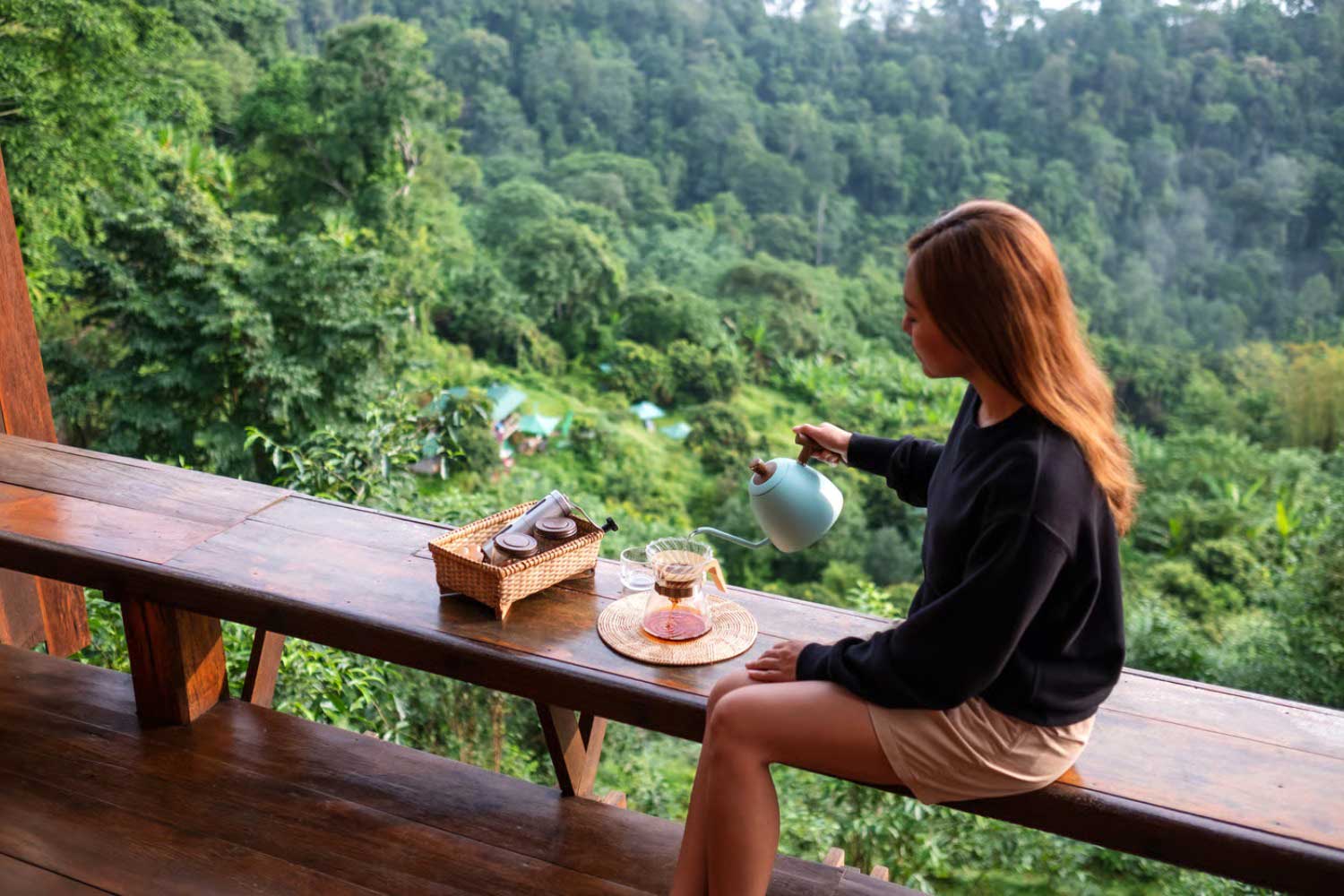
A private safari at dawn, structured around light and animal behaviour rather than a clock. A long, genuinely unscheduled stretch of midday with nowhere to be and no itinerary competing for attention. An evening that runs at whatever pace a Palaash table or a bonfire circle sets, not a checklist of resort activities to get through. None of this is marketed as a digital detox programme, because it doesn’t need to be packaged as one. It is simply what an unhurried few days here already looks like.
The Sustainability Connection
Travellers seeking genuine disconnection increasingly gravitate toward accommodations built around sustainable practice rather than generic luxury branding. That pattern is not a coincidence. A place that has already committed to slower, more deliberate choices in how it builds and runs itself, vernacular architecture over air conditioning, a working food forest over imported produce, tends to also be a place where slowing down as a guest feels consistent with everything around you, rather than at odds with a property otherwise built for speed and convenience.
Frequently Asked Questions
Does Tipai have a formal digital detox programme?
Not in the structured, rule-based sense some retreats use. Disconnection here happens naturally, through thin signal, a private safari’s pace, and genuinely unscheduled time, rather than through enforced device policies.
Is mobile signal actually unavailable at Tipai?
Signal thins out significantly within the forest itself, though villa areas may have varying connectivity; guests should confirm current signal conditions directly, since this can change.
Is a digital detox stay only suitable for solo travellers?
No. Group and family digital detox travel is one of the fastest-growing segments of this trend, and Tipai’s villa configurations for families and groups support this equally well.
What does research say about the benefits of a digital detox trip?
Recent studies link digital detox tourism to measurable improvements in attention restoration and psychological wellbeing, particularly when disconnection happens within a genuinely restorative natural environment rather than through willpower alone.
Do I need to give up my phone entirely to benefit from this kind of stay?
No. The approach here is about reducing the pull toward a phone by giving you something more engaging to pay attention to, not about strict device prohibition.





