



QUICK ANSWER The striped hyena in India is a shy, nocturnal scavenger with a striped coat and a crest of fur along its back. Tipeshwar Wildlife Sanctuary’s official species list includes it, but the 2021 Wildlife Institute of India survey reported no sighting counts or density for it, so it is listed, not measured.
Key Takeaways
- The striped hyena (Hyaena hyaena) is on the faunal list of Tipeshwar Wildlife Sanctuary in the 2021 Wildlife Institute of India report.
- The same report gives no density, sighting count or activity data for hyenas, so we cannot say how many live there.
- It is mostly nocturnal and shy, which makes a daytime sighting very unlikely.
- It is often confused with the golden jackal, which is smaller, lighter and common.
- Tracks and droppings are the likeliest signs a visitor will meet.
Striped Hyena in India: What You Need to Know
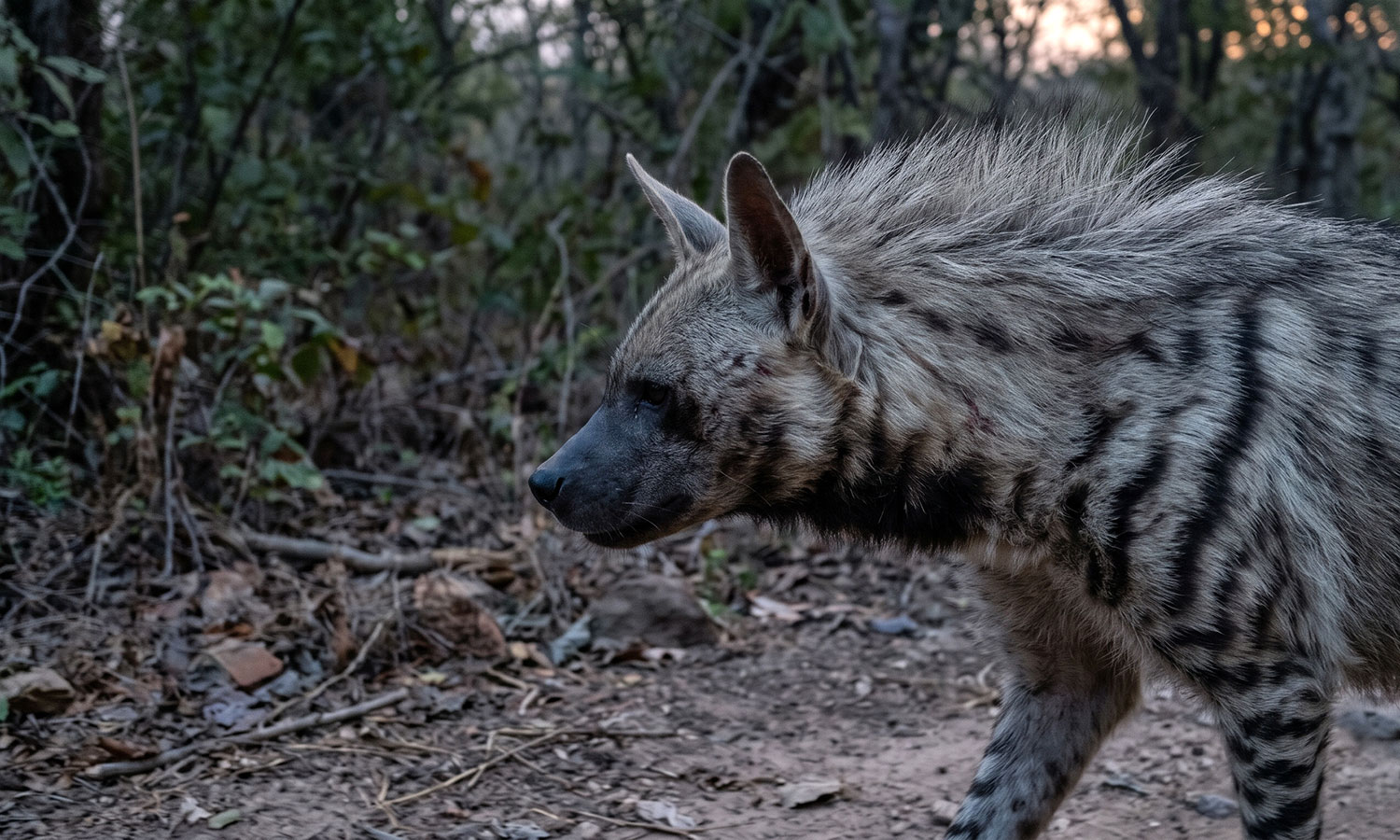
Few animals are as misunderstood as the striped hyena in India. It is not a cousin of the dog, and it is nothing like the laughing spotted hyena of Africa. It is a quiet, nocturnal scavenger with a striped coat, large ears and a crest that rises along its back when it is alarmed. Our travel guide to Tipeshwar explains the sanctuary where it is recorded, and this page explains what is known and what is not.
The striped hyena, Hyaena hyaena, has a long, stocky body, a sloping back and a heavy muzzle. It lives in scrubby, open country and forest edges and hunts little. It is mainly a scavenger, feeding on carcasses and a mixture of smaller foods. It is also widely understood to be shy of people, which is why a sighting is a real event.

Is the Striped Hyena Found in Tipeshwar?
The Wildlife Institute of India’s 2021 report on Tipeshwar Wildlife Sanctuary lists the striped hyena in its faunal list, alongside tiger, leopard, dhole, wolf, golden jackal, sloth bear and others. That list is the basis for saying it is a resident.
Be clear about what the report does not say. It gives no density, no number of sightings, no camera-trap count and no activity overlap for the hyena. Several other species, such as the sloth bear, jungle cat, wolf and dhole, have mapped use areas in the report. The hyena does not. In plain terms, the hyena is listed, not measured. We do not know how many there are, and we will not guess. Our breakdown of the Wildlife Institute of India survey shows exactly which species were measured.
Striped Hyena, Golden Jackal or Wolf?
At dusk, three medium-sized carnivores can look alike from a moving vehicle. This table shows how to separate them.
| Feature | Striped hyena | Golden jackal | Wolf |
| Overall look | Stocky, sloping back, dark vertical stripes | Slender, golden-tan, fox-like | Long-legged, greyish, rangy |
| Ears | Large and pointed | Medium and pointed | Medium and upright |
| Mane or crest | Yes, raises when alarmed | No | No |
| Typical behaviour | Solitary and nocturnal | Pairs or small groups, often vocal | Packs, mostly in open country |
| Listed at Tipeshwar | Yes, species list only | Yes, species list | Yes, mapped by camera traps |
Golden jackals are by far the most likely of the three to be seen. We explain their calls and habits in our guide to the golden jackal. A hyena shows more bulk, a dark stripe pattern and the crest. If you cannot see stripes, you are probably looking at a jackal.
How the Hyena Lives
Hyenas spend the day in a den, a cave or a thicket, and come out after dark to search for food over long distances. They are known to carry food back to cover, including bones, and to clear carcasses that other animals leave. In the forest, that scavenging role helps recycle what predators leave behind.
Because hyenas are most active at night, they overlap little with the daytime world of a safari jeep. Even with a skilled naturalist, you should treat a sighting as unlikely and a track or dropping as the more realistic find.
Signs a Visitor Might Find
- Tracks: blunt, four-toed prints with visible claw marks, often along dusty tracks after dark.
- Droppings: pale, chalky pellets are a common sign where hyenas have fed on bone.
- Dens: sheltered rock crevices or thickets, which your naturalist will point out but not approach.
- Calls: hyenas are usually quiet, so do not expect a chorus.
Learning to read these signs is part of what makes a drive rewarding. Our guide to reading signs in the forest covers tracks and alarm calls in more detail.

Sharing the Night With Other Residents
Hyenas share the forest with larger and smaller night-time neighbours. The same camera-trap work that mapped the sloth bear and other species did not report hyena data, so this animal remains a quiet gap. Our guide to the overlooked species of Tipeshwar places it alongside the other lesser-seen residents.
What a Night at Tipai Offers
Tipai keeps its nights dark. That is part of the quietest luxury we describe elsewhere, and it also gives nocturnal animals less to avoid. You may not see a hyena, but you will hear the forest at night, and sometimes find a track in the morning.
A Word on Conservation Status
The striped hyena is assessed as Near Threatened on the IUCN Red List. Check the current assessment before quoting it, as listings are reviewed from time to time. In India it is widely regarded as under pressure from habitat loss, persecution and a drop in carcasses available to scavenge.
Myths and Reality
Hyenas carry a bad reputation in folklore, often painted as cowardly or sinister. The striped hyena’s real behaviour is far less dramatic. It is a cautious animal that avoids people, feeds largely on what others leave behind, and spends the day hidden. If anything, it is a quiet cleaner of the forest, which is why researchers value it as a marker of how well a habitat still functions.
Why a Scavenger Matters in a Tiger Forest
Large predators do not finish every kill. What remains feeds a chain of smaller animals, from vultures to jackals to hyenas. A forest that supports tigers and leopards therefore produces carcasses that support scavengers too. A healthy scavenger community suggests a forest where the larger animals are doing their work.
Watching Night Animals Responsibly
- Keep to the vehicle and the route your naturalist chooses.
- Never use a bright spotlight to search for animals. It stresses them and disturbs other wildlife.
- Stay silent when your guide stops to listen. Many nocturnal animals are heard before they are seen.
- Do not leave food or waste on a track, as it draws animals toward vehicles.
These habits matter more for shy animals like the hyena than for any other, because one disturbance can change where it feeds for days.
Frequently Asked Questions
Is the striped hyena found in India?
Yes. It occurs across much of India in scrub, open country and forest edges. It is shy and mostly active at night.
Are there hyenas in Tipeshwar Wildlife Sanctuary?
The 2021 Wildlife Institute of India report lists the striped hyena among the sanctuary’s fauna. It reports no density or sighting data for it.
How can I tell a hyena from a jackal?
A striped hyena is stocky, with dark stripes, large ears and a crest of fur along its back. A golden jackal is slender and golden-tan with no stripes.
Are hyenas dangerous to people?
The striped hyena is shy and avoids people. As with any wild animal, keep your distance and follow your naturalist’s guidance.
Can I see a striped hyena on safari at Tipeshwar?
It is very unlikely. Hyenas are mostly nocturnal, and signs such as tracks are a more realistic find.
What does the striped hyena eat?
It is mainly a scavenger, feeding on carcasses and a mixture of smaller foods. It rarely hunts large prey.





