



QUICK ANSWER Learning how to track tigers on safari means combining two kinds of evidence: pugmarks and territorial marks, which show where a tiger has been, and alarm calls from sambar deer, langurs and other species, which show where it is right now. A sambar’s deep bark is considered the single most reliable indicator, and a naturalist who can read all of these signs together, alongside seasonal and time-of-day patterns, is doing most of the real work behind a good sighting long before the tiger itself appears.
Key Takeaways
- Pugmarks and territorial marks show where a tiger has been; alarm calls show where it is now, and naturalists combine both to find one.
- The sambar deer’s deep alarm bark is widely considered the single most reliable tiger indicator in Indian forests.
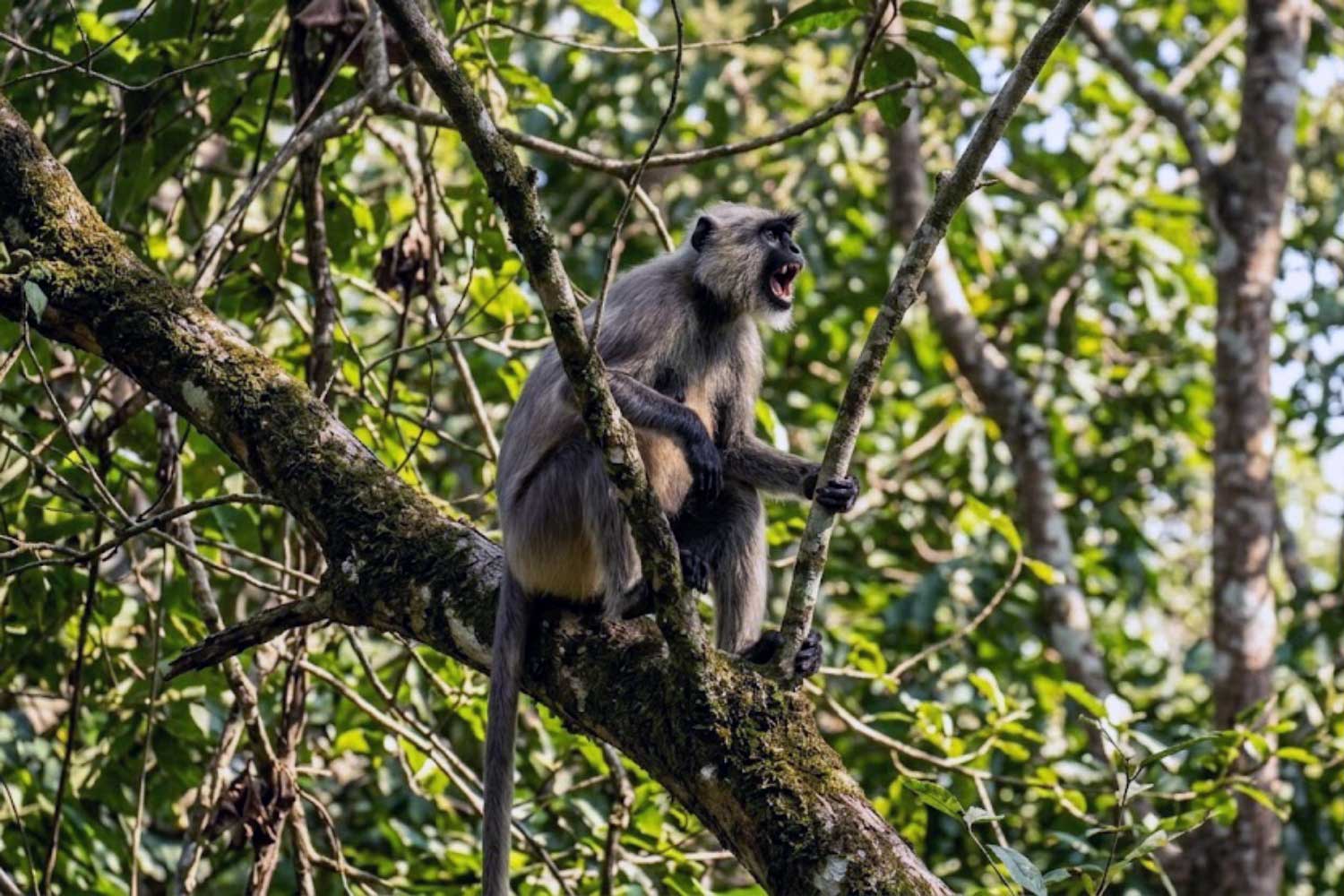
- Langurs call from the treetops and change the intensity of their alarm depending on whether they have spotted a tiger or a leopard, since a leopard can follow them up a tree.
- Fresh pugmarks are clearest in the early morning on dew-covered soil or sand, and during the monsoon, when tracks wash away quickly, alarm calls become the primary tool.
- Even jackals give a distinct alarm call at a tiger, a useful cross-check for anyone who already knows their ordinary chorus howl.
The Sighting Starts Before You See Anything
Most of what happens before a tiger sighting has nothing to do with the tiger being visible at all. It is a forest full of other animals reacting to something the jeep cannot yet see, and a naturalist reading those reactions the way you might read a weather forecast. Anyone who has already read about the language of the golden jackal will recognise the underlying idea: animals are constantly broadcasting information, and a tiger safari is really an exercise in learning which broadcasts matter.
Two kinds of evidence make up almost all of it: physical signs left behind, and live alarm calls happening in real time.
What the Ground Tells You
Physical signs are the tiger’s own paperwork, evidence of where it has already been and how recently.
| Sign | What it shows |
| Fresh pugmarks | Direction of travel and, to a trained eye, roughly which individual made them; clearest on dew-covered soil or sand in the early morning |
| Scrape and claw marks on trees | Territorial marking, showing a tiger considers this ground its own |
| Scent sprayed on trees or rocks at boundary points | The same territorial message as a scrape, left for the next tiger to pass through |
| A large, disturbed patch of ground or drag marks | Possible evidence of a kill; a sambar-sized kill can hold a tiger in the same area for two to three days |
None of these signs say where a tiger is right now. For that, the forest itself has to do the talking.That same patience pays off elsewhere in the forest too it is the same patient, extended-wait approach that rewards wildlife photographers at Tipeshwar.

What the Forest Is Actually Saying
Alarm calls are the live feed. Where a pugmark can be hours or days old, an alarm call means something is happening within earshot right now, and different species contribute different kinds of information.
| Caller | What to listen for | What it tells you |
| Sambar deer | A deep, resonant bark, sometimes described as a dhonk | Considered the most reliable single indicator; one call means a tiger has been seen, repeated calling suggests it is on the move |
| Langur | A sharp, repeated kae-kae-kae or whooping bark from the treetops | Height gives langurs an early view; the direction the troop is facing, and how the call changes for a leopard versus a tiger, both carry information |
| Chital (spotted deer) | A short, sharp bark, often with a stamped foot | A fast, twitchy warning, usually meaning the threat is close and moving |
| Peacock | A harsh, repeated screeching call | Ground-level birds add a layer of cover the deer and langurs cannot, especially in thicker vegetation |
| Jackal | A distinctive alarm call distinct from its evening chorus | Even a jackal will call out at a tiger, which is a useful cross-check if you already know its ordinary vocal range |
A guide stations themselves at a likely spot once a call starts, watching which direction it moves and whether other species pick it up, effectively triangulating a tiger’s position from sound alone before it ever steps into view.
Why Season and Time of Day Change the Method
Fresh pugmarks are easiest to read in the cool of early morning, when dew keeps soil and sand soft enough to hold a clear print, and many tigers favour forest roads at this hour simply because they are easier to move along. Through the monsoon, standing water and rain wash tracks away almost as fast as they are made, which is exactly when alarm calls become the dominant tool rather than a supporting one. A naturalist who has spent enough seasons in one forest adjusts the balance between these methods automatically, without needing to think about it as a decision.
Why This Rewards a Private, Patient Safari
None of this works well under time pressure. Waiting at a likely spot once a sambar has called once, rather than driving on immediately, is often the difference between confirming a tiger’s position and losing it. A private safari, with no other guests’ schedule to manage, can afford exactly that kind of pause, holding still long enough for a second call, a change in a langur’s pitch, or a third species picking up the same alarm, before deciding where to go next.
Frequently Asked Questions
Which animal’s alarm call is most reliable for tracking a tiger?
The sambar deer’s deep, resonant bark is widely considered the single most reliable indicator among Indian forest species, with a single call suggesting a sighting and repeated calling suggesting the tiger is moving.
Can pugmarks tell you anything beyond a tiger’s direction?
Experienced trackers can often distinguish an individual tiger and estimate roughly when a track was made, based on size, depth and how crisp the edges remain, though this takes considerable practice to read reliably.
Why are alarm calls more useful than pugmarks during the monsoon?
Rain and standing water wash pugmarks away quickly, sometimes within hours, so alarm calls become the more dependable tracking method during the wetter months.
Do langurs call differently for a tiger than for a leopard?
Naturalists and guides commonly report that langur alarm calls carry more intensity and fear for a leopard, since leopards can climb trees after them, unlike tigers.
Do other species besides deer and monkeys give alarm calls?
Yes. Peacocks, jungle fowl, barking deer and even jackals all produce distinct alarm calls when a tiger or other large predator is nearby, adding further cross-checks for an experienced naturalist.





