



QUICK ANSWER Where to stay in Tipeshwar comes down to five checks: how close the lodge sits to the sanctuary, whether the night sky is dark, who guides you, how few vehicles share the forest, and whether the food and rooms let you rest between drives. Tipai, a 34-acre property beside the sanctuary, is built around all five.
Key Takeaways
- Tipeshwar is a small wildlife sanctuary of 148.63 sq km, not a tiger reserve, so the lodge you choose shapes the trip more than it would in a large park.
- Five checks separate a good base from an average one: location, darkness, guides, crowding and rest.
- A lodge on the sanctuary’s edge turns the forest into your neighbourhood, not a commute.
- Dark skies are a quiet marker of care. Ask directly how a lodge handles outdoor lighting.
- Ask what the private safari actually includes before you compare rooms and prices.
Where to Stay in Tipeshwar: Start With the Forest, Not the Room
Most people searching for where to stay in Tipeshwar begin with room photographs. Start with the map instead. Tipeshwar Wildlife Sanctuary covers 148.63 sq km in Pandharkawada tehsil of Yavatmal district, in Vidarbha, near the Telangana border. It is compact, so the real question is how close you sleep to it and how quietly. Our travel guide to Tipeshwar covers the practical side of getting here. This page helps you choose between the bases on offer.
Tipeshwar is also a sanctuary, not a notified tiger reserve, though it holds tigers. That matters for your choice. There is no sprawling zone system with dozens of lodges competing for the same gate, so the differences between places come down to a few things you can check yourself.
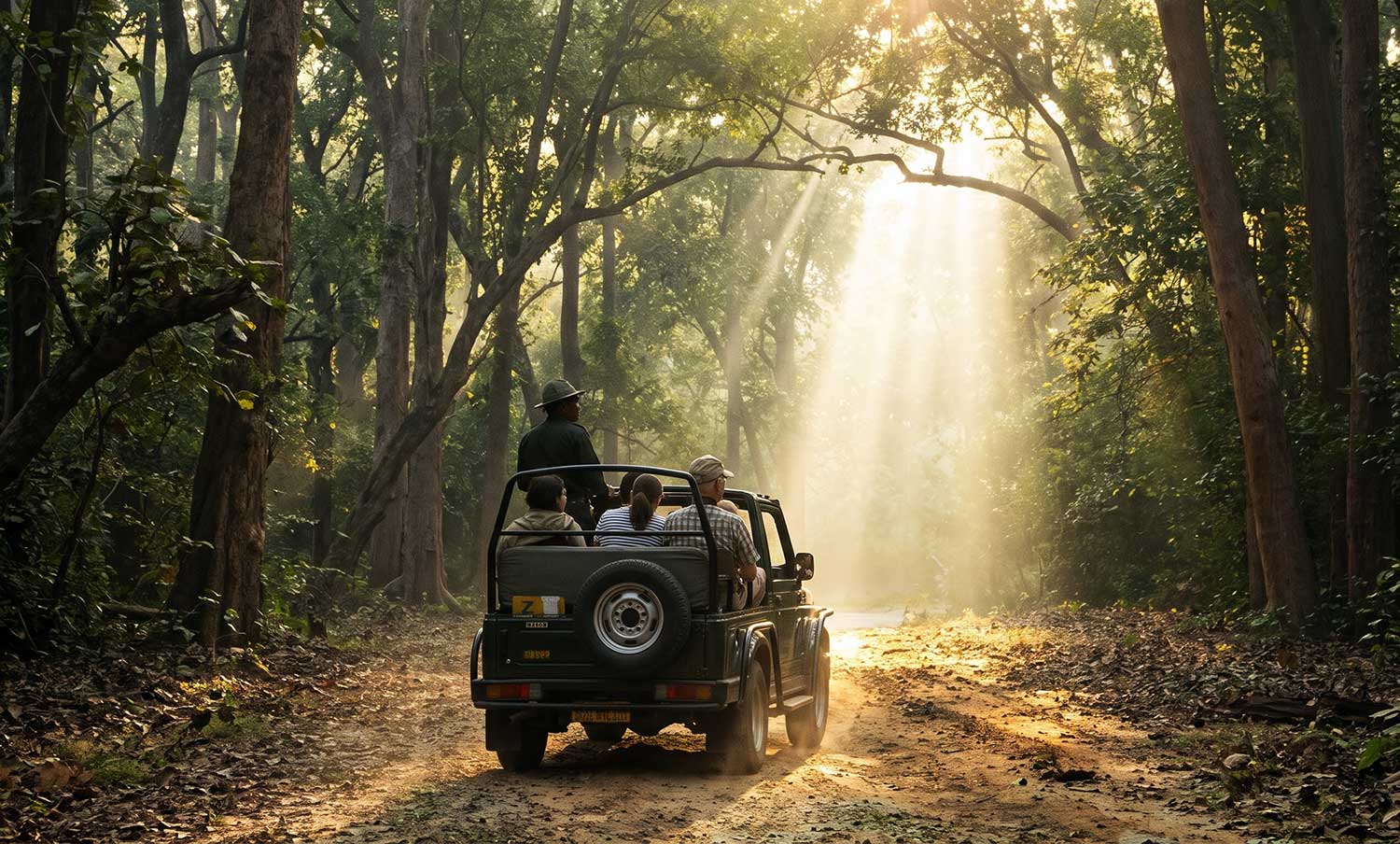

The Five Checks
1. How close is the lodge to the forest?
Distance to the sanctuary decides how early your day can start and how much of the morning is spent on a road. A lodge on the edge of the forest lets you hear the dawn chorus from the veranda and be on the track while the light is still low. Ask for the actual drive to the safari gate, and ask which gate. Distances from cities such as Hyderabad run roughly 338 to 366 km depending on the gate, so a base that spares you extra transfers is worth more than it first appears.
2. Is the night sky actually dark?
Many lodges describe themselves as remote. Fewer manage their lighting. Floodlit paths and bright signage push insects, owls and nightjars away and wash out the stars. Ask what the outdoor lighting policy is. Tipai is built around having no light pollution, which is why the property reads as a place for night-sky watching as much as safaris.
3. Who guides you, and how?
A good naturalist reads tracks, alarm calls and the behaviour of other animals, and turns a drive into a story. Ask how many years your guide has worked this forest, whether you drive with a naturalist or only a driver, and whether the safari is private. Tipai’s Head Naturalist is Rohan Deshmukh, and the lodge’s own naturalist team leads the drives.
4. How crowded will the forest feel?
Crowding shapes the sighting more than people expect. In larger parks, tip-offs travel by phone and jeeps converge on a single animal within minutes. We wrote about this in detail in the jeep problem. Tipeshwar’s size and low vehicle volume avoid much of it, and a private safari removes the pull to chase another vehicle’s sighting.
5. Can you rest properly between drives?
Safari days are early and long. A lodge that lets you sleep, eat well and slow down between drives gives you a better second morning than a place that is merely convenient. This is where space, food and calm earn their keep.
A Quick Comparison Checklist
Use this table when you compare any two places. The right-hand column shows how Tipai answers each question, so you can judge it like any other option.
| Question to ask | Why it matters | How Tipai answers |
| Distance to the sanctuary | Sets your dawn start and removes long transfers | A 34-acre property adjacent to Tipeshwar Wildlife Sanctuary |
| Night lighting policy | Protects stars, owls and insects | Built around no light pollution |
| Who guides the drives | Reading signs finds more than speed | Head Naturalist Rohan Deshmukh and the lodge’s own team |
| Safari format | Private drives avoid chasing crowds | Private safari format |
| Food | Long days need real meals | Palaash, created by Chef Amninder Sandhu, and the Perch dining venue |
| Space and privacy | Rest between drives | Villas set within 34 acres |
What a Forest-Edge Villa Changes
Staying beside the sanctuary changes the rhythm of the trip. You wake to the forest, not to an alarm and a transfer. Afternoons do not have to be wasted waiting for the next departure, and evenings can be spent outside under a dark sky instead of indoors. Our piece on quietest luxury explains why seclusion across 34 acres is a feature, not a gap in the service.
The villas at Tipai are designed around this idea, with space between each one and the forest within sight. If you travel as a family or a group, interconnecting configurations let you share a stay without sharing walls.
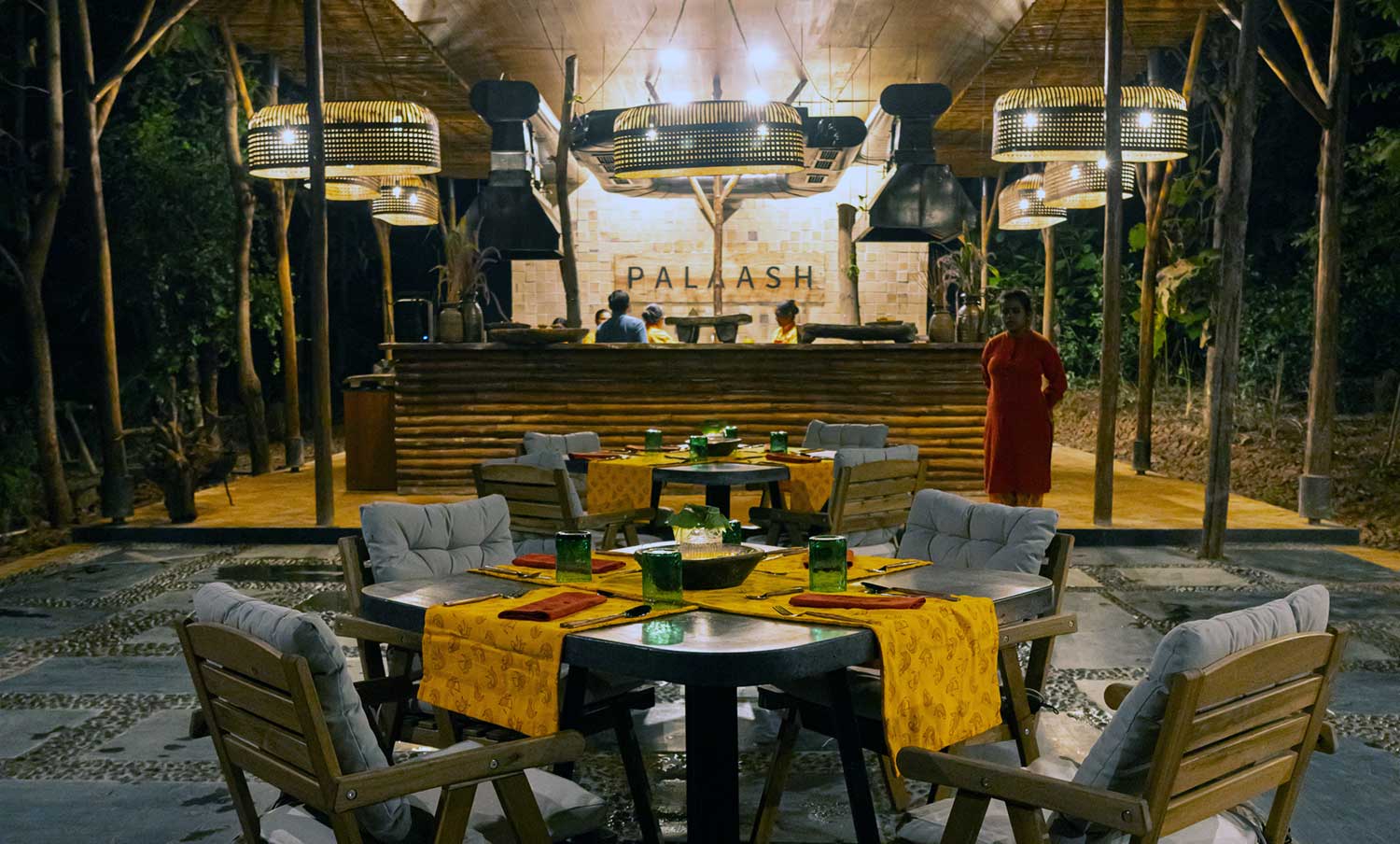

Food, Rest and the Parts Between Safaris
The meals shape the stay as much as the drives do. Palaash and Perch anchor the dining. Palaash was created by Chef Amninder Sandhu, a nationally awarded chef and founder partner at Tipai. There is a bio-pool for the heat of the afternoon, and wellness at Tipai gives the slower hours somewhere to go. For many guests, the quiet between drives is what they remember.
Choosing by Trip Type
- First safari: choose a base with a private, guided format and a naturalist who explains what you are seeing.
- Photographers: ask about vehicle arrangements, early starts and how the lodge handles light at dawn and dusk.
- Families and groups: look for villas that can connect, and meals that suit children and adults alike.
- Couples and celebrations: prioritise privacy, a dark sky and dining that feels like an occasion.
- Repeat visitors: look for a naturalist team that keeps learning the forest with you.
If you are still deciding between parks, our Central India parks compared sets Tipeshwar beside Kanha and Bandhavgarh. For a sense of what the forest holds, see the sanctuary’s survey data. And if you want to know where a night’s rate goes, we explain where your room rate goes.
Questions to Ask Any Lodge Before You Pay
- What is the actual drive to the safari gate, and which gate do you use?
- How is outdoor lighting managed at night?
- Is the safari private, and who is in the vehicle with me?
- Who is the naturalist, and how long have they worked this forest?
- What is included in the rate, and what is charged separately?
- What happens if the forest is closed or conditions change?
Honest answers to these six questions tell you more than any brochure.
Frequently Asked Questions
Where is the best place to stay near Tipeshwar Wildlife Sanctuary?
The best base is one that sits on the sanctuary’s edge, keeps its night sky dark, offers a private guided safari and lets you rest between drives. Tipai, a 34-acre property adjacent to the sanctuary, is built around all four.
Is Tipeshwar a tiger reserve?
No. Tipeshwar is a wildlife sanctuary of 148.63 sq km in Yavatmal district, Maharashtra. It holds tigers but is not a notified tiger reserve.
Which state is Tipeshwar in?
Maharashtra. It lies in Vidarbha, in Pandharkawada tehsil of Yavatmal district, close to the Telangana border.
How far is Tipeshwar from Hyderabad?
Roughly 338 to 366 km by road, depending on the gate you use. Check the current route before you travel.
Does Tipai offer private safaris?
Yes. Tipai offers a private safari format, so you are not placed in a shared vehicle and have no reason to chase other jeeps.
What should I ask before booking a lodge near Tipeshwar?
Ask about the drive to the gate, outdoor lighting, who guides you, whether the safari is private, what the rate includes and what happens if the forest is closed.





